How to Batch-Visit 4 Lab Accounts in One Morning (The Facility-Type Clustering Trick)
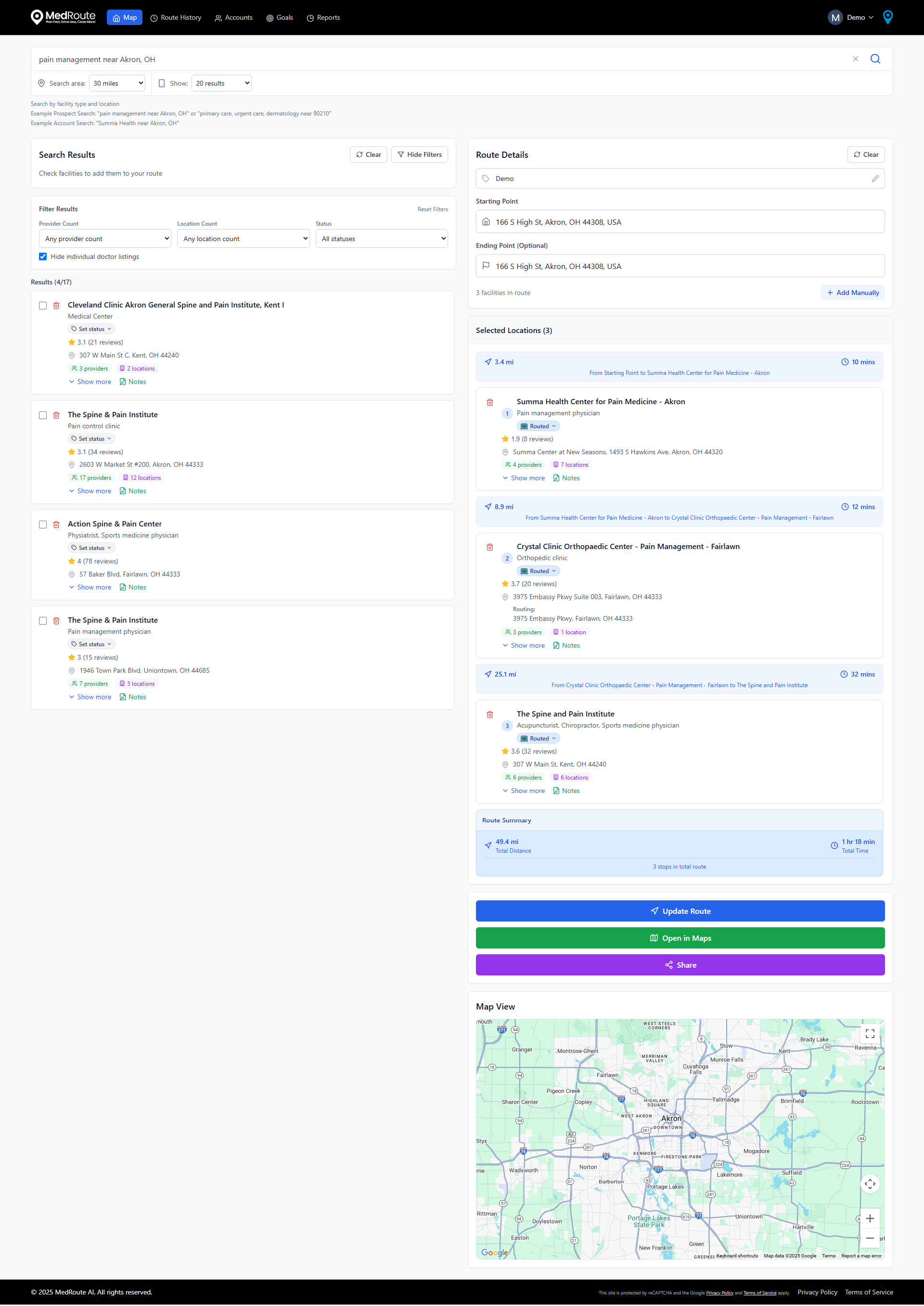
If you're a lab sales rep, the morning is where your week is won or lost. Most reps I train come in doing 2–3 account visits before lunch. The top 10% I've worked with consistently do 4 — and the outliers hit 5 without burning out. The difference isn't hustle. It's one simple routing habit: facility-type clustering.
The trap: "closest first" routing
Most reps plan their morning by mileage. You look at your 15 accounts, pick the closest three, and drive between them in whatever order Google Maps gives you. It feels efficient, but it costs you stops. Here's why:
- A hospital lab visit runs 25–40 minutes (security, badging, finding the lab director).
- A physician-office lab (POL) visit runs 10–15 minutes — you walk in, talk to the office manager, drop kits, done.
- A reference lab visit is somewhere in between.
If you mix facility types in your morning, you're constantly context-switching between short drop-ins and long relationship visits. Your brain burns energy reorienting, and you end up rushing the longer conversations because you're mentally already at the next stop.
The fix: cluster by facility type, not geography
Group tomorrow's morning by type of visit, not by distance. Here's the pattern that works:
- Start with one high-value hospital or IDN visit. This is the stop that absolutely needs your A-game. Do it first, before the day's entropy sets in.
- Then batch 2–3 POL or urgent care visits in the nearest cluster. Short, fast, kit-drop-and-go. You're now in drop-in mode, not relationship mode.
- End with a reference lab or independent lab if you have one in the area.These are usually medium-length and make a natural wind-down.
Net effect: you stayed in one "mental mode" per cluster, so you never rushed the long visit, never over-invested in the short ones, and your drive time barely went up.
Why this gets you the 4th stop
The reason most reps stall at 3 morning stops isn't the driving. It's the 15 minutes of recovery time between visits — sitting in the car, checking notes, deciding what to do next. When you batch by type, you pre-decide. You know the next three stops are all POLs and you know exactly what you're doing at each. That cuts the in-car "what now?" time from 15 minutes to 3, and suddenly you've got room for a 4th before lunch.
How to actually do this in MedRoute
In MedRoute, tag every account with a facility-type label (Hospital, IDN, Reference Lab, Independent Lab, POL, Urgent Care). Then when you build tomorrow's route:
- Filter the Accounts view to just the facility types you want in tomorrow's morning batch.
- Pick the 4–5 stops, add them to a route.
- Use priority-based scheduling to put the one high-value visit first.
- Let the optimizer handle the driving order within each cluster.
The route builder takes 3 minutes. The pattern saves you an hour a week.
One last thing — the "bonus 5th stop" move
If you're using Route History, save your best morning routes by territory. When you have to replan a Wednesday in that territory six weeks later, you don't rebuild from scratch — you reload the saved route and tweak. That recovered planning time usually buys you one more stop.
Try it for one week. Track your morning stops per day in a notebook. Most reps I coach go from 2.7 average to 3.8 within five business days.
Frequently asked questions
How many lab accounts can a rep visit in one morning?
Four is a realistic target when the rep clusters similar facility types, starts with the highest-value fixed visit, and keeps nearby flexible stops in the same morning loop.
Why cluster lab visits by facility type?
Facility-type clustering reduces context switching. A hospital lab, physician-office lab, reference lab, and urgent care visit usually require different prep, talk tracks, and visit lengths.
Should lab reps optimize by distance or priority first?
Priority and access constraints should come first, then drive order. The shortest route is not useful if it misses the lab director, office manager, or lunch-and-learn window that matters.
About the author
Brandon Worley
Brandon Worley is the founder of MedRoute AI. He carried a territory as a field medical sales rep, then built and ran a 450-person medical sales team. Today he trains medical sales reps and teams full-time, and built MedRoute from the pain points he and the reps he trains experienced in the field every day.
Connect on LinkedInKeep reading
Reference Lab Sales Route Planning Loops That Hold
A practical route loop for reference lab reps who need to protect follow-up windows before optimizing the rest of the territory day.
ReadRoute PlanningLab Sales Route Planning vs Google Maps
A practical comparison for lab reps deciding when Google Maps is enough and when a field-sales route planner is the better fit for territory days.
ReadWant these tactics easier to execute?
MedRoute AI is the tool Brandon built to make every tactic in this library 10x easier.