Pharma Rep Selling Time: Why It Keeps Shrinking
MedRoute Team
Founder, MedRoute AI
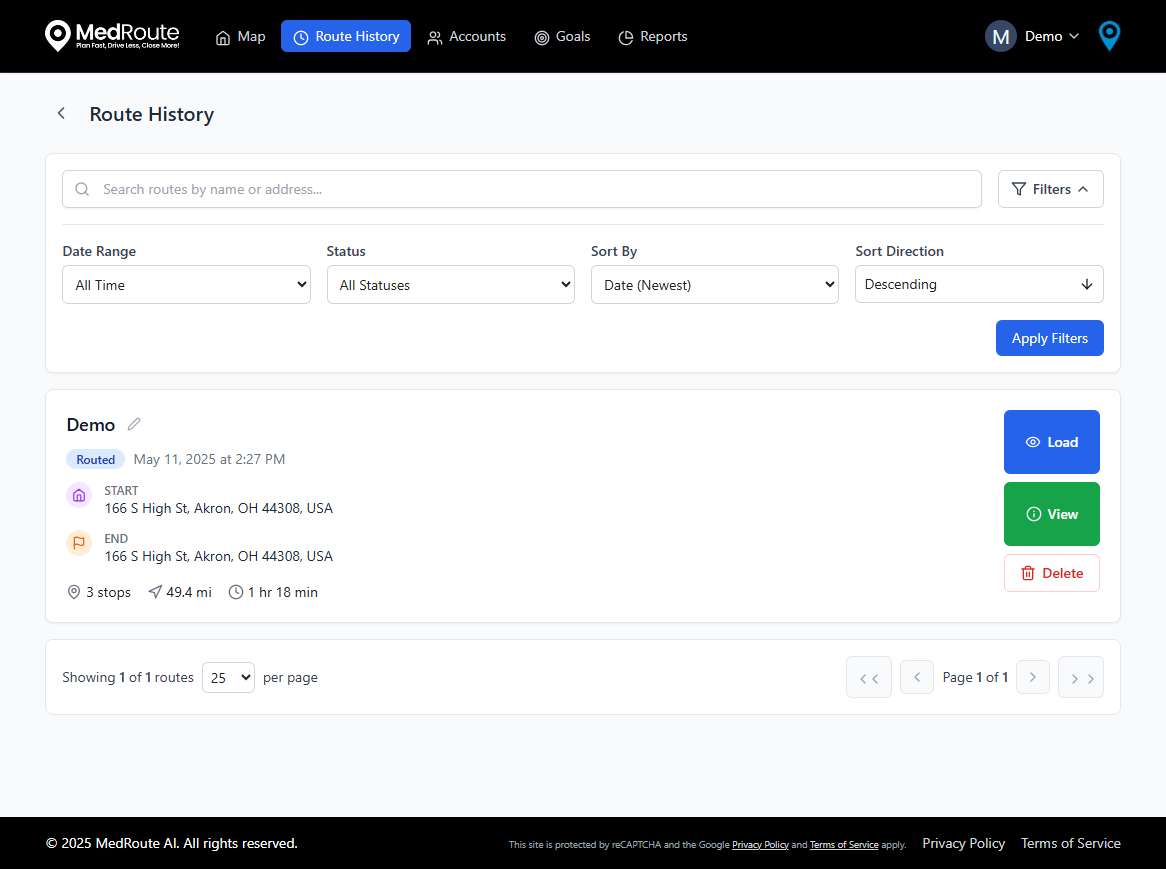
If your route looks full but your day feels thin, you are not imagining it. Pharma rep selling time is getting squeezed by admin, restricted HCP access, and route churn. Sales route optimization is the practice of sequencing account visits, drive legs, and time windows so the rep spends less of the day deciding and more of it in front of qualified accounts.
This post is for pharma reps and field managers who still do real territory work: office visits, lunch-and-learns, sample drops, Reptrax credentialing windows, and last-minute changes from clinics. If your facility list is ready and the route is the bottleneck, MedRoute is built to make the driving plan faster without locking you into an enterprise CRM.
TL;DR
- Selling time usually leaks through small handoffs, not one obvious time sink.
- Current sales benchmarks point to more non-selling work than selling work.
- HCP access is more selective, so the route has to protect the best windows.
- A 10-minute route reset can save the day before the first clinic opens.
Table of contents
- What is pharma rep selling time?
- Why it keeps shrinking
- Route order is now a selling skill
- The 10-minute selling-time reset
- Frequently asked questions
What is pharma rep selling time?
Pharma rep selling time is the part of the workday spent in real account movement: reaching healthcare professionals, advancing a clinical conversation, booking the next touch, or getting a qualified stakeholder one step closer to the right product discussion.
It does not include staring at a spreadsheet in the parking lot, rebuilding the order of 18 stops, or driving past the same hospital twice because the route was built closest-first. Those tasks matter, but they are support work. They should not eat the prime office windows.
What is pharma rep selling time? It is the portion of the workweek a pharma rep spends in revenue-producing account conversations, not planning, data entry, credentialing, sample logistics, or route cleanup. Salesforce's 2026 State of Sales report says sales professionals spend 40% of an average workweek selling and 60% not selling, with 16% on preparation and planning alone. The U.S. Bureau of Labor Statistics says wholesale and manufacturing sales reps also handle reports, scheduling, expense filing, and travel planning, and notes that outside sales representatives spend much of their time traveling to current clients and prospective buyers. That mix matters in pharma because every unscheduled detour can eat a clinic window. The practical goal is not to delete every support task. It is to move those tasks out of the highest-value access windows. MedRoute helps on the routing side: it sequences facility visits so the route is not another admin task.
Why pharma rep selling time keeps shrinking
The first leak is admin. A rep finishes a call, logs notes, checks a formulary question, updates a manager, confirms a sample drop, and then opens a map. None of those steps is bad. The problem is the order. When each task happens from scratch between visits, 12 minutes turns into 35.
The second leak is access. A clinic may still accept lunch, but only on Tuesdays. An office manager may wave reps through before 10:30 a.m. and shut the door after patients stack up. A hospital may require a badge refresh before you can even ask for the service line lead.
Try MedRoute free
Built by field reps. Browser-based. Handles routes way past the Google Maps stop wall.
Plan your first routeWhy does HCP access change selling time? HCP access changes selling time because fewer open doors make route timing more valuable. Veeva's Pulse Field Trends Report reported that U.S. HCP access declined from 60% in 2022 to 45% in 2024. The same report said half of accessible HCPs meet with three or fewer companies, and some restrictive specialties limit access even further. A pharma rep cannot fix that market shift from the car. The rep can protect the windows that are still open. For field teams, that means a seven-stop plan can beat a twelve-stop plan if it hits the few offices where access is realistic. The calendar, badge rule, lunch timing, and drive order have to work together. MedRoute is useful when the fixed access windows stay fixed and the flexible stops move around them.
Route order is now a selling skill
The old habit was simple: sort by distance and hope. That breaks when the territory has fixed lunch windows, credentialed hospitals, a rural clinic that closes at noon, and a high-value office that only sees reps after morning patients clear.
The best route is not always the shortest route. It is the route that keeps you available when the right account can actually talk. That is why a smart territory loop often starts with constraints, then lets the flexible stops fill the gaps.
| Selling-time leak | What it costs | Rep move |
|---|---|---|
| Credentialing window missed | A hospital stop becomes a drive-by | Lock the appointment before optimizing |
| Closest-first routing | Backtracking after lunch | Cluster flexible stops by side of town |
| Parking-lot replanning | 10 to 20 minutes between visits | Save reusable territory loops |
Why does waypoint order matter for field reps? Waypoint order matters because the same facilities can create very different days depending on sequence. Google explains in its waypoint optimization documentation that route optimization can reorder intermediate waypoints for a more efficient trip, with limits such as 25 place-ID waypoints or 98 latitude-and-longitude waypoints. MedRoute is built on Google Maps directions and waypoint optimization, then wraps that routing logic in a rep-first workflow: large routes are chunked around 25 waypoints, reps can drag and drop priority stops, and saved routes can be reused when the same territory loop comes back. That does not mean a route should ignore business rules. A must-see doctor, a 12:00 p.m. lunch, or a hospital checkpoint still belongs at the top of the plan before optimization starts.
The 10-minute selling-time reset
Use this before the week starts, or at 7:30 a.m. when the day changes. It is not a full territory plan. It is a reset that protects the next selling block.
- Mark fixed windows first. Lunch-and-learns, badge windows, call-backs, and sample drop cutoffs go on the route before anything flexible.
- Tag the flexible stops. Separate must-see accounts from nice-to-see accounts. If the day breaks, you need to know what can move.
- Optimize the driving order. Use browser-based route optimization once the constraints are known. Do not hand-sort 20 stops from a parking lot.
- Save the loop. If the route worked, save it. Next month, reload it and adjust. This is how a recurring territory stops feeling new every Tuesday.
- Review one metric. At the end of the day, compare planned selling windows against completed account conversations. The related Academy guide on daily field sales KPIs gives you a simple way to track the habit.
Where MedRoute fits
MedRoute is not trying to be a giant CRM. It is the route planner built by field reps, for field reps. If your team is still using Google Maps plus spreadsheet duct tape, the win is simpler: paste or build the facility list, optimize the multi-stop route, adjust the order, and keep the route for the next time you work that territory.
| Need | Generic map habit | MedRoute |
|---|---|---|
| Large route | Split by hand | Handles large routes in optimized chunks |
| Priority stop | Manually rebuild | Drag and drop the stop order |
| Recurring loop | Start over | Save and reload routes |
For another route tactic you can run this week, read the Academy breakdown on batching facility visits in one morning.
The bottom line
Pharma rep selling time does not disappear all at once. It leaks out through admin, access misses, and route decisions that happen too late. Protect the fixed windows, optimize the flexible stops, and save the routes that work. Start with tomorrow's facility list and plan your first MedRoute route.
Frequently asked questions
How much time do pharma reps spend selling?
The best current benchmark is broader sales data, not a pharma-only stopwatch study. Salesforce reported that sales professionals spend 40% of an average workweek selling and 60% on non-selling work. Pharma reps should treat that as a warning sign and measure their own field time.
What reduces pharma rep selling time?
Selling time gets reduced by admin, data entry, credentialing, sample logistics, access restrictions, late route changes, and unclear account priority. The biggest leak is usually the handoff between tasks: finishing one visit, deciding what matters next, then rebuilding the route from the car.
How do pharma reps plan routes around access windows?
Start with fixed windows first: lunch-and-learns, Reptrax badge times, known office manager availability, and sample drop cutoffs. Then add flexible drop-ins nearby. A route planner helps when it can reorder the flexible stops without breaking the fixed appointments for that morning.
About the author
Brandon Worley
Brandon Worley is the founder of MedRoute AI. He carried a territory as a field medical sales rep, then built and ran a 450-person medical sales team. Today he trains medical sales reps and teams full-time, and built MedRoute from the pain points he and the reps he trains experienced in the field every day.
Connect on LinkedInKeep reading
Lab Sales Territory Planning 2026: What Changed
Lab reps in 2026 need route loops that protect access windows, specimen logistics, POL follow-up, and recurring territory coverage.
ReadCall Notes & CRMLab Sales Follow Up Timing: Same Day or Next Day?
A field-ready timing framework for lab reps deciding which visit promises deserve same-day follow-up and which belong in the next route.
ReadWant these tactics easier to execute?
MedRoute AI is the tool Brandon built to make every tactic in this library 10x easier.